


Travel should feel simple—your at-home security plan can be, too.
Seasonal travel often means your home holds more “easy-to-grab” valuables than usual: jewelry after holiday events, extra cash from side work, important documents needed for school or taxes, and gear for outdoor trips. A well-planned safe setup helps you leave with confidence—without turning your pre-trip routine into a project. This guide walks through a practical, homeowner-friendly checklist for securing seasonal valuables before you hit the road, with tips that work whether you own a compact home safe or a full-size gun safe.
Step 1: Identify what actually counts as “seasonal valuables”
Most people think “valuables” equals jewelry or a few important papers. In real life, seasonal valuables change with your calendar—hunting and camping seasons, tax season, summer travel, holiday gift cycles, and even home renovation season.
For documents specifically, FEMA’s Ready campaign recommends storing important documents in a safe place, including options like a safety deposit box, external drive, or the cloud for easier access after a disaster. (ready.gov)
Quick seasonal inventory (common categories)
Documents: passports, birth certificates, social security cards, insurance policies, vehicle title, property records.
Jewelry & keepsakes: watches, rings, heirlooms, small collectibles.
Firearm-related items: optics, accessories, and other controlled items you want secured when you’re away.
Electronics & data: spare phones, external drives, backup storage, camera gear.
Cash equivalents: checkbooks, small cash reserves, gift cards.
Step 2: Choose the right “container strategy” (not everything belongs in one spot)
A smart travel-security plan uses layers:
This layered approach reduces the risk of a single point of failure—especially for documents you may need quickly.
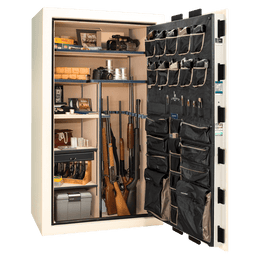
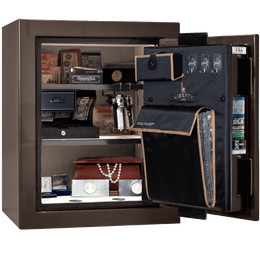
Layer A — Your safe: the primary home storage point for physical items you don’t want accessed while you’re away.
Layer B — Offsite/digital backups: scans/photos of key documents stored securely (encrypted drive or reputable cloud).
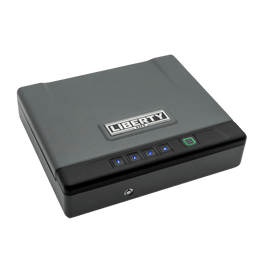
Layer C — “Carry with you” micro-kit: the few items you must have during travel (IDs, travel documents), kept on your person or in a travel lockbox.
Step 3: Understand security ratings in plain English (so you’re not guessing)
When people compare safes, they often focus on size and price first. For travel security, two specs matter most: burglary resistance and fire protection.
Burglary ratings (common reference points)
UL RSC (Residential Security Container): a baseline residential burglary rating intended to resist a short hand-tool attack. (Often described as a 5-minute “net working time” test.) (usasafeandvault.com)
TL ratings (TL-15 / TL-30, etc.): higher tool-resistance ratings used more often in commercial contexts; “15” or “30” refers to the test’s net working time under defined tool attacks. (en.wikipedia.org)
Practical takeaway: for many households, the biggest “real-world upgrade” is pairing a quality safe with proper placement + anchoring + good lock habits. Those steps often make an immediate difference when you’re away for a weekend or a full week.
Step 4: The pre-travel safe checklist (15–30 minutes, start to finish)
A) Prep the items going into the safe
1) Sort by category: documents, jewelry, electronics/data, and any other high-value items.
2) Use protective sleeves: place paper documents in a sealed pouch; keep jewelry in soft organizers to prevent scratches.
3) Create a quick inventory note: a simple list helps you confirm everything is back where it belongs when you return.
B) Prep the safe itself
4) Confirm your lock routine: test the lock once before packing the safe—no rushing at the last second.
5) Check power/battery (if electronic): replace batteries proactively if you’re within a few months of the last change.
6) Improve interior visibility: good lighting reduces “fumble time” when organizing. If you want a clean, purpose-built solution, Liberty Safe offers interior light kits like the Brightview Safe Light Kit and Clearview LED Wand options. You can link a reminder for yourself to add lighting later rather than making it a pre-trip chore.
C) Reduce “environment risks” while you’re away
7) Add a humidity-control plan: in many regions, seasonal humidity swings are the real culprit behind musty odors and corrosion on metal items. Use a dehumidifier rod or desiccant packs as appropriate for your setup.
8) Keep items off the safe floor: use shelves or small bins to reduce risk from minor water intrusion (spills, HVAC issues).
9) Store digital copies securely: Ready.gov specifically recommends keeping copies of important documents on the cloud. Use strong passwords and multi-factor authentication where available. (ready.gov)
A simple comparison table: what goes where before you travel?
| Item type | Best pre-travel storage | Extra step that pays off |
|---|---|---|
| Original documents | Safe (sealed pouch) + secure digital backup | Scan to encrypted storage/cloud for recovery access (ready.gov) |
| Jewelry/watches | Safe (soft organizer, separated) | Quick inventory list + photos (stored securely) |
| External drives / photos | Safe + offsite/cloud redundancy | Use password protection + MFA where possible (ready.gov) |
| Small cash & checkbooks | Safe (separate envelope) | Minimize what you keep on-hand when traveling |
Did you know? Quick facts that improve travel-time peace of mind
“Net working time” matters in burglary ratings: UL burglary tests often describe time as the period tools are actively applied to the safe, not the full elapsed time of an event. (en.wikipedia.org)
UL RSC is a defined baseline test: RSC describes a residential category intended to resist a short tool attack using specified tools. (usasafeandvault.com)
Digital copies help recovery: Ready.gov emphasizes storing important documents in secure digital form (including cloud storage) so they can be accessed after an emergency. (ready.gov)
United States travel angle: plan for weather swings, not just trips
In the U.S., seasonal travel often overlaps with seasonal weather patterns—summer humidity, winter heating cycles, and shoulder-season storms. If you’re leaving valuables for several days, aim for stability inside the safe:
Keep the room consistent: avoid placing the safe in an area with extreme temperature swings (garage corners, uninsulated outbuildings).
Use interior lighting to reduce time-open: better visibility helps you organize quickly and close the door sooner—especially on mobile-first “packing day” schedules.
Keep digital access in mind: if you need to prove identity or access key records while away, cloud backups reduce stress. (ready.gov)
Want help choosing a safe setup that matches your travel routine?
Liberty Safe can help you evaluate safe size, interior organization, lighting accessories, and day-to-day usability—so your pre-trip checklist stays simple.
FAQ: Securing valuables before you travel
Should I keep original documents in my safe or only copies?
Keep originals secured, but also create secure digital copies. Ready.gov specifically recommends keeping copies of important documents uploaded to the cloud so you can access them if needed. (ready.gov)
What’s the quickest upgrade for a safe that feels hard to use?
Interior organization and visibility. Adding motion-activated lighting and using labeled pouches/bins reduces time spent with the door open and helps you confirm everything is stored correctly before you leave.
What does “UL RSC” actually mean?
UL RSC (Residential Security Container) is a burglary-resistance category intended for residential use. It’s commonly described as a short, tool-based attack test with defined tools and “net working time.” (usasafeandvault.com)
Should I rely on a safe alone for travel security?
A safe is a strong foundation, but the best results come from layering: safe + smart placement + anchoring (where appropriate) + digital backups for documents. That combination supports both day-to-day security and recovery if you need records while away. (ready.gov)
How do I keep my safe from becoming cluttered?
Assign zones: a “documents” pouch, a “jewelry” organizer, a “tech/data” bin, and a small “seasonal” section. When you return from a trip, do a two-minute reset so the next pre-travel checklist is fast.
Glossary (quick definitions)
UL (Underwriters Laboratories): An independent organization that publishes safety standards and conducts certain product testing programs, including burglary and fire-resistance classifications for safes. (en.wikipedia.org)
RSC (Residential Security Container): A UL burglary-resistance category commonly referenced for residential safes, associated with a defined tool-attack test and “net working time.” (usasafeandvault.com)
TL-15 / TL-30: Tool-resistance ratings where “15” or “30” refers to net working time under specified tool attacks (typically higher-security, often commercial-grade). (en.wikipedia.org)
Net working time: A testing concept used in some burglary ratings—time when tools are actively applied to the safe, rather than total elapsed time. (en.wikipedia.org)
Related Liberty Safe resources: Gun Safe Use and Care | Fire Protection You Can Trust