


More Than a Metal Box: A Detailed Comparison for Quick-Access Security
When it comes to securing a handgun for quick access, the market is flooded with options. It's easy to find imported handgun vaults at appealingly low prices, promising security for a fraction of the cost of premium, American-made models. However, the true cost of a security product isn't its price tag—it's its reliability when you need it most. The differences in design, materials, and construction between a high-quality domestic vault and a mass-produced import are significant, impacting everything from durability to the certainty of access in a critical moment.
Choosing a handgun vault is an investment in safety and peace of mind. Understanding what sets a superior product apart is essential for making a confident decision. This guide breaks down the key distinctions you need to know.
The Foundation: Steel Quality and Construction
It Starts with Steel: Why Gauge Matters
The first line of defense in any safe is the steel it’s made from. Steel thickness is measured in "gauge," where a lower number indicates thicker, stronger steel. Many lower-quality imports use thin, 16 or 18-gauge steel to cut costs. While this may deter a child, it offers minimal resistance to a determined attempt at forced entry. A simple hand tool can often puncture or pry open such a thin container.
In contrast, reputable American manufacturers build their home safes and vaults with heavier steel, often 14-gauge or thicker. This substantial difference in thickness dramatically increases pry-resistance and overall durability. It ensures that the vault itself won't be the weakest link in your security plan.
Built to Resist: The Importance of Welds and Door Seals
A strong steel body is only effective if it's constructed properly. Lower-quality imports often feature "spot welds" or skip welds at the seams, leaving gaps and weak points that can be exploited. A well-placed crowbar can easily pop these welds and compromise the entire structure.
Premium vaults, however, utilize continuous robotic welds. This creates a solid, unified body that is far more resistant to brute-force attacks. Furthermore, the door construction is critical. Look for minimal gaps between the door and the frame, as tight tolerances make it nearly impossible to insert prying tools. This level of precision is a hallmark of quality manufacturing.
The Brains of the Operation: Locking Mechanisms
Reliable Access When Seconds Count
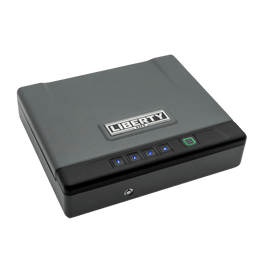
The lock is arguably the most critical component of a quick-access vault. This is where many imports fall short. They may use cheap electronic components and biometric scanners that are prone to failure. Stories of failed fingerprint reads, dead batteries with no key backup, or complete electronic failure are common with these products. In an emergency, unreliable access is no access at all.
High-quality handgun vaults invest heavily in proven, reliable locking technology. Whether it’s a quick-combination mechanical lock, a responsive electronic keypad, or a high-resolution biometric system, these locks are tested rigorously for speed, dependability, and security against tampering. The internal electronics are robust, ensuring they perform consistently for years.
Beyond the Lock: Anti-Pry and Bolt Work
Even with a good lock, the door must be held secure. The internal bolt work—the steel bolts that engage to lock the door—is another area of differentiation. Imported models may use a single, thin locking latch. A quality vault will feature multiple, thick steel locking bolts. Additionally, look for anti-pry technologies, such as tabs on the door that interlock with the frame, to prevent the door from being peeled back even if the hinges are compromised.
Feature Comparison: American-Made vs. Imported Vaults
| Feature | High-Quality American-Made Vault | Typical Lower-Quality Import |
|---|---|---|
| Steel Gauge | Thicker (e.g., 14-gauge or lower) | Thinner (e.g., 16 or 18-gauge) |
| Construction | Continuous Welds, Tight Tolerances | Spot Welds, Large Door Gaps |
| Lock Reliability | High-quality, tested electronics/biometrics | Prone to failure, inconsistent reads |
| Pry-Resistance | Excellent, with multiple locking bolts | Minimal, often a single latch |
| Warranty & Support | Comprehensive, with accessible customer service | Limited or non-existent |
The American-Made Advantage
Choosing an American-made safe from a company like Liberty Safe offers benefits that go beyond the product itself. You are investing in superior quality control, stringent manufacturing standards, and local jobs. More importantly, you get access to world-class support. An established domestic company provides a meaningful warranty and the best customer service, ensuring that help is available if you ever need it. This robust support network provides long-term value and confidence in your purchase—a crucial element that is often missing with overseas products.
Did You Know?
- The lower the steel gauge number, the thicker and stronger the steel. A 12-gauge steel body is significantly stronger than a 16-gauge one.
- Many quick-access safes can be opened with simple tools or even a paperclip due to design flaws. A quality vault is tested against these common bypass methods.
- In a high-stress situation, a reliable lock that opens on the first try is critical. The internal electronics of a vault are just as important as the steel it's made from.
Ready for Security You Can Trust?
Don't compromise on the safety of your family and valuables. Explore our full line of American-made handgun vaults and discover the peace of mind that comes with superior quality and unwavering reliability.
Contact Us TodayFrequently Asked Questions (FAQ)
What is the most important feature in a handgun vault?
While steel thickness is crucial for preventing forced entry, the most important feature is lock reliability. A vault must open quickly and consistently every time. Without reliable access, even the strongest box is ineffective in an emergency.
Is a biometric lock better than a keypad?
The "better" lock depends on your preference. High-quality biometrics offer extremely fast, one-handed access. High-quality electronic keypads are also very fast and are not affected by dirt or moisture on your hands. The key is to choose a vault with a high-quality version of either technology, not a cheap, unreliable imitation.
How much of a difference does steel thickness really make?
A significant difference. Thicker steel (a lower gauge) provides exponentially more resistance to cutting, drilling, and prying. The move from a thin 18-gauge to a robust 14-gauge or 12-gauge steel body can be the difference between a vault that can be opened in seconds with a crowbar and one that resists serious attack attempts.
Why should I pay more for an American-made safe?
Paying more for an American-made safe is an investment in higher-grade materials, superior construction standards, proven lock technology, and a comprehensive warranty backed by accessible customer support. You are paying for reliability, durability, and peace of mind.
Glossary of Terms
Steel Gauge: A standard of measurement for sheet metal thickness. In the context of safes, a lower gauge number corresponds to thicker, more secure steel.
Biometric Lock: A type of lock that uses a unique physical characteristic of an individual, such as a fingerprint, to grant access.
Pry-Resistance: The capability of a safe or vault to defend against attacks using tools like crowbars or screwdrivers intended to force the door open.
Bolt Work: The system of heavy steel bolts that extend from the interior of the safe door into the body of the safe, securing it against entry.