


A safe isn’t just “where valuables go”—it’s your home’s most reliable organization zone
A well-chosen safe can reduce clutter, prevent “where did I put it?” stress, and create a single, consistent place for the items that cause the most household chaos: important papers, backups, heirlooms, high-value gear, and the small essentials you need quickly. With a few layout tweaks and habits, your safe becomes a practical home-organization tool—one that also adds a meaningful layer of security and fire protection.
1) Build your “home command center” inside the safe
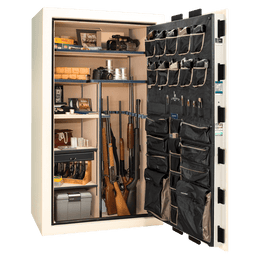
The goal is simple: fewer piles, fewer junk drawers, and fewer lost items. Think of your safe as a structured cabinet with zones. Instead of tossing everything into a single shelf, assign each shelf (or door panel) a job:
Suggested safe zones (easy wins)
“Grab & Go” shelf: passport wallet, spare keys, spare car fob (if applicable), travel documents, a small envelope of emergency cash.
Family documents file: hard copies of insurance policies, deed/lease copies, birth certificates, marriage certificate, and contact list.
Digital backups: labeled USB/SSD backups (stored in a protective case), plus a printed “how to access accounts” sheet stored separately from devices.
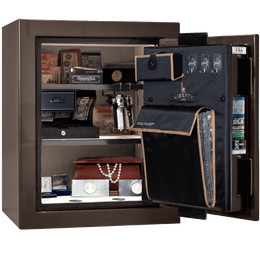
Jewelry & keepsakes: small trays or pouches to prevent tangles and scratches.
Specialty gear: optics, hearing protection, range accessories, or other hobby items that benefit from a dedicated, consistent home.
One underrated upgrade is lighting. If you’re using a safe as a true organization space, visibility matters—especially when you’re grabbing something quickly. Consider adding an interior light kit such as Liberty Safe’s Brightview Safe Light Kit or the Clearview LED Wand Light Kit with motion sensor so every shelf is usable, not just the front edge.
2) Use the safe door like a vertical organizer wall
Vertical space is the difference between “organized” and “stacked.” Many safe interiors support door panels or accessories that turn the door into storage for small items. If you store magazines or small accessories, purpose-built organizers (like Liberty’s AR-15 Mag Holder) reduce clutter and make a safe easier to inventory at a glance.
For multi-use households, door storage also works well for labeled pouches (for example: “Batteries,” “Cables,” “Spare Locks,” “Inventory List”), keeping shelves free for larger items.
3) Organize for protection: humidity control is an organization hack (not just maintenance)
Organization isn’t only where things go—it’s also keeping items in the same condition you stored them in. Humidity swings can be hard on metals, woods, and some polymers. Liberty Safe notes the NRA-recommended range for vault rooms or safes is often 30%–50% relative humidity, with a stable, reasonably cool temperature. (libertysafe.com)
Practical routine: place a small hygrometer inside the safe, aim for steady readings, and use an appropriate moisture-control solution for your environment. The payoff is less “rehoming” items due to surface wear or musty odors—and fewer surprises when you open the door after a season.
4) Choose a safe based on what you’re organizing (security + fire labels matter)
Many homeowners compare size and shelves, then stop there. A better approach: match the safe’s performance ratings to what you’re storing. For example, UL’s Residential Security Container (RSC) classification is a recognized burglary-resistance benchmark used for many “gun safe” style products, with revisions that created multiple tiers of performance criteria. (ul.com)
| What you want organized | What to prioritize | Why it helps organization |
|---|---|---|
| Documents & paper records | Fire performance and interior layout | You can store “life paperwork” in one predictable place without fearing everyday household hazards |
| High-value small items | Burglary-resistance labeling (such as UL RSC, where applicable) | Less need to “hide” items around the home—your system becomes consistent |
| Gear with metal parts | Humidity control space + lighting | Clean, visible storage helps you keep a simple inventory and reduces duplicate purchases |
If you store digital media, be aware that some fire rating schemes distinguish between paper and sensitive media (with lower temperature thresholds for data). (safesandmore.com) If you’re building a “paper + backup drive” safe routine, it’s worth thinking through how you’ll protect each category.
Did you know? (Quick facts that make safes easier to shop and use)
RSC is a real test category
UL’s RSC standard exists to help define burglary-resistance performance, and it has evolved into tiered criteria. (ul.com)
Humidity targets can be specific
A commonly cited best-practice range for vault rooms/safes is roughly 30%–50% RH, paired with stable temperatures. (libertysafe.com)
Light changes behavior
When you can see what you own, you’re more likely to put it back in the right zone and keep a clean inventory (especially on mobile “quick check” moments).
5) Step-by-step: set up a safe that stays organized (even on busy weeks)
Step 1: Decide what belongs inside (and what doesn’t)
List the top 15 items you search for each year: documents, small valuables, backup media, specialty gear, and anything you’d hate to replace. Keep it to essentials—overstuffing kills organization.
Step 2: Create “containers within the container”
Use small trays, zip pouches, or document envelopes. Label them in plain language (“Home Docs,” “Travel,” “Backups,” “Warranties”). This prevents the “everything becomes a pile” problem.
Step 3: Add visibility upgrades
Install interior lighting so your safe works like a closet, not a cave. If you want a clean, modern look, choose a dedicated LED kit such as Clearview Multicolor Lights (motion sensor) or a white-light kit for straightforward illumination.
Step 4: Maintain a quick monthly “two-minute reset”
Once a month, remove anything that migrated into the safe that doesn’t belong, re-stack documents neatly, and confirm your labels still match what’s inside. The habit is small; the long-term payoff is huge.
Step 5: Keep a small “safe-access kit” nearby
A simple flashlight and spare batteries help during outages or late-night access. If you want a dedicated option, Liberty offers a compact 500-lumen tactical flashlight that’s easy to keep staged.
6) A practical United States angle: organize for seasons, travel, and insurance readiness
In the United States, many households rotate gear and documents seasonally—hunting/outdoor gear, travel folders, tax documents, and home-improvement paperwork. A safe makes these transitions cleaner:
Season swap: Keep “current season” items front-and-center; store off-season items in labeled pouches on a lower shelf.
Travel routine: Create a travel pouch with photocopies (or printed confirmations) so you’re not hunting through drawers the night before a trip.
Home records: Keep a single folder for home upgrades and serial numbers—useful for claims and warranty lookups, and it keeps paperwork from spreading across the house.
If you want help choosing a layout or accessories that match your space and routine, Liberty Safe’s main hub is a good starting point: Liberty Safe — Home, Fire, and Gun Safes.
Need help building a safe setup that stays organized?
Whether you’re planning your first safe, upgrading lighting, or trying to create a clean document-and-gear system, Liberty Safe can point you to practical options and support.
Contact Liberty Safe
Prefer to browse first? Explore models and accessories, then reach out with your space measurements and a list of what you want to store.
FAQ: Home organization hacks using safes
What’s the #1 mistake people make when organizing a safe?
Using shelves without categories. Add labeled pouches/trays and assign zones (documents, backups, valuables, accessories) so items always return to the same place.
How do I keep my safe from becoming a “random storage box”?
Use a monthly two-minute reset: remove non-essentials, re-stack documents, and confirm each shelf still matches its label. Lighting helps because you can actually see what’s drifted where.
What humidity range should I aim for inside a safe?
A commonly recommended target for preserving stored items (especially metal/wood components) is around 30%–50% relative humidity with stable temperatures. (libertysafe.com)
Is “UL RSC” the same as a fire rating?
No—RSC refers to a burglary-resistance performance category. Fire ratings are separate and focus on keeping interior temperatures below certain thresholds for a set time. (ul.com)
What’s a simple upgrade that makes organization easier immediately?
Interior lighting. When shelves are clearly visible, you can keep categories separated, spot missing items quickly, and avoid stacking “just for now” piles.
Glossary (plain-English safe & storage terms)
RSC (Residential Security Container)
A UL burglary-resistance performance category commonly associated with many home/gun safe products; the standard has been revised to support tiered performance criteria. (ul.com)
Relative Humidity (RH)
A measure of how much moisture the air holds compared to how much it could hold at that temperature. Stable RH helps protect stored items from moisture-related deterioration. (libertysafe.com)
Motion-sensor safe lighting
An interior lighting setup that turns on automatically when the safe opens or detects movement—useful for fast access and keeping storage zones visible.