


A practical guide for homeowners who want real protection, not marketing noise
Buying a safe isn’t just picking a size and a lock. It’s a long-term decision about how you protect firearms, documents, heirlooms, and the items you can’t replace. “Manufacturing excellence” shows up in the details: steel construction, door design, fire protection approach, and the ability to live with the safe every day (lighting, organization, humidity control, and service). This guide breaks down what to look for—using clear, non-technical checkpoints you can compare in minutes.
What “manufacturing excellence” means for a safe (in plain terms)
A quality safe is a system, not a single feature. Great manufacturing brings consistency—tight tolerances, repeatable welds, reliable lock operation, robust hinges, and a door that closes smoothly and seals correctly. It also means the safe was designed to work in the real world: it can be anchored properly, it resists common pry and attack methods, and it helps protect contents during a house fire scenario with a door seal strategy and insulation approach that’s engineered (not improvised).
Helpful benchmark: Many gun safes are evaluated under UL’s Residential Security Container (RSC) category (UL 1037). In that testing, technicians attempt to create a small opening in the door or front face within a limited time using common hand tools. Seeing a UL RSC listing can be a useful “apples-to-apples” signal when comparing security claims. (ul.com)
Core build features that matter most
1) Steel construction and door engineering
Thicker steel, reinforced door frames, and smart anti-pry design help a safe resist forced entry. Don’t get stuck on one spec (like steel gauge) by itself—look at the overall door and frame design, the locking bolt engagement, and how the door fits when closed. A well-built safe closes with consistent alignment, without rubbing, binding, or “springing” at the corner.
2) Fire protection: understand what ratings can (and can’t) tell you
Fire performance depends on insulation strategy, door seals, and how the safe behaves when exposed to high heat over time. Many consumer safes are described with a “minutes at temperature” style label, but not all ratings are created equal. When you compare models, look for clear, consistent documentation of the rating method and the safe’s construction approach.
| What you see while shopping | What it usually means | What to verify |
|---|---|---|
| “60 minutes” / “90 minutes” fire protection | A stated duration the safe is intended to protect contents under a defined test scenario | Test method details, temperature point, door seal strategy, and what content types it’s aimed to protect |
| “RSC” (UL Residential Security Container) | A recognized burglary-resistance category for many gun safes | Whether the safe is UL-listed and what category/standard is referenced |
| “Seal” or “expanding seal” language | Often refers to intumescent-type seals that expand with heat to help block smoke/hot gases | Where the seal is placed (door jamb, frame) and replacement/service guidance |
3) Locks: choose reliability and usability
Mechanical and electronic locks can both be excellent when they’re matched to your lifestyle. The best lock is the one you’ll use correctly, every time. If you prefer electronics, plan for battery maintenance and keep your owner’s documentation accessible. If you prefer a dial, practice a smooth, repeatable opening routine so you don’t rush it when you’re in a hurry.
4) Interior fit-and-finish: organization is a security feature
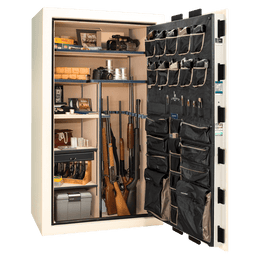
A well-designed interior reduces “safe clutter,” which helps prevent dings, optic bumps, and annoying gear piles. Lighting and modular accessories make the safe easier to use on day one and year five—especially if you store a mix of long guns, handguns, documents, and small valuables.
Upgrade idea: interior lighting
If you’ve ever used a safe with a phone flashlight, you already know why lighting matters. Liberty Safe offers dedicated LED light kits designed for safe interiors.
Upgrade idea: motion-sensor convenience
Motion-sensor lighting can make frequent access smoother—especially in low-light rooms, garages, or closets.
Step-by-step: how to shop for the right safe (without second-guessing later)
Step 1: List what you’re protecting—and what you’ll add later
Estimate your current storage needs, then add a buffer. Many owners outgrow their “perfect size” faster than expected because accessories, optics, cases, and important documents take space. If you’re between sizes, the larger safe often feels “right” within a year.
Step 2: Choose the best location first (it affects everything)
Before you pick a model, pick the room. Measure doorways, hallway turns, stairs, and the final footprint. Also consider humidity exposure (basements, garages, and exterior walls often need extra moisture control).
Step 3: Plan to anchor the safe properly
Anchoring is one of the most practical security upgrades you can do because it helps prevent tipping and makes removal far more difficult. Anchoring methods vary by floor type (wood vs. concrete) and should match the safe’s factory anchor holes and the flooring structure. For concrete installs, common approaches include wedge anchors or other purpose-built concrete anchoring hardware. (pewpewtactical.com)
Practical reminder: If you’re anchoring to wood, aim for structural members (like joists), not just thin subfloor. If you’re anchoring to concrete, choose anchors sized for your safe and follow drill depth guidance carefully.
Step 4: Build a humidity control plan (especially in many U.S. regions)
Even a great safe benefits from climate management. Two common approaches are a powered dehumidifier rod (warms air to reduce condensation risk) and desiccant (absorbs moisture). Many owners use both: a rod for steady control and desiccant for spikes after frequent openings. Monitoring with a small hygrometer helps you see what’s working. (howardenvironmental.com)
Step 5: Make daily use easy (you’ll use the safe more often)
The more convenient the safe is, the more consistently it gets used. Interior lighting, a clean layout, and dedicated storage for small essentials (like a flashlight) reduce “friction” and keep access organized.
Quick “Did you know?” facts
Did you know? UL’s RSC testing is focused on attacks against the door and front face, with technicians attempting to create a limited-size opening using common hand tools within a set time window. (ul.com)
Did you know? Humidity control inside a safe often works best when you manage the room’s humidity too—especially in basements—so the safe isn’t fighting high ambient moisture every day. (howardenvironmental.com)
Did you know? Many rod-style solutions are offered in different lengths to match safe volume, and desiccant performance varies by local humidity and how often the door is opened. (gundigest.com)
Local angle: choosing a safe for homes across the United States
The U.S. has huge climate variation, and that changes what “best” looks like. In humid regions and coastal areas, prioritize a repeatable humidity plan (rod + desiccant + basic monitoring). In dry regions, you may focus more on convenient organization and dust control. In areas with seasonal storms, anchoring and placement (away from exterior doors and prying sightlines) becomes even more important. Regardless of region, plan the install path carefully—door clearances, turns, and flooring strength are where purchases often get complicated.
Want help picking the right Liberty Safe setup?
If you’d like guidance on sizing, placement, lighting, organization, and everyday use, the Liberty Safe team can point you to options that match your home, budget, and storage goals.
FAQ: Safe buying, setup, and everyday ownership
What does “UL RSC” mean on a gun safe?
RSC stands for Residential Security Container. It’s a UL category commonly associated with many gun safes and focuses on resistance to certain forced-entry attacks against the door/front face within a limited time window using common tools. (ul.com)
Should I anchor my safe to the floor?
In most homes, anchoring is strongly recommended because it improves stability and adds a meaningful barrier against removal. The correct anchor hardware depends on whether you’re installing on concrete or wood and should match the safe’s anchor hole layout. (pewpewtactical.com)
Is a safe airtight? Do I still need humidity control?
Most safes are not fully airtight, and moisture management is a common part of safe ownership—especially in humid climates or basements. Many owners use a dehumidifier rod, desiccant, and a small hygrometer to confirm conditions are staying in a healthy range. (howardenvironmental.com)
What’s the easiest “quality of life” upgrade for a safe?
Interior lighting. It improves visibility, speeds up access, and makes organization more practical—especially if your safe is in a closet or a low-light room. Liberty Safe offers LED lighting kits made specifically for safe interiors.
How do I keep manuals and key info organized?
Store owner documentation in a safe-friendly folder and keep a simple checklist: lock type, battery type (if applicable), accessory list, and a schedule for humidity checks. If you ever need service or support, organized information saves time.
Glossary (quick definitions)
RSC (Residential Security Container)
A UL category commonly used for many gun safes, focused on limited-time resistance to forced entry attacks against the door/front face using common tools. (ul.com)
Intumescent seal
A heat-activated material that expands when exposed to high temperatures, helping reduce gaps around a door and limit smoke/hot gas intrusion in fire scenarios.
Desiccant
A moisture-absorbing material used in safes to help control humidity (often rechargeable or replaceable depending on type). (gundigest.com)
Dehumidifier rod
A powered device placed inside a safe that gently warms the air to reduce condensation risk and help stabilize humidity conditions over time. (gundigest.com)