


Rethinking Home Security: Where to Place Your Safe for Maximum Protection and Convenience
When you think of a home safe, what comes to mind? For many, it's a large, heavy box tucked away in a dusty corner of the garage, basement, or a home office. While these locations are traditional choices, modern home security strategy suggests a more integrated approach. Placing your safe in a more personal and accessible space, like a bedroom or a walk-in closet, can significantly enhance both its security and its utility. It’s about merging superior protection with everyday life, ensuring your most prized possessions are not only secure but also conveniently within reach. This guide offers inspiration for seamlessly incorporating a high-quality safe into the more intimate spaces of your home.
Why Your Bedroom or Closet is the Ideal Spot for a Safe
Enhanced Security Through Discretion
Burglars tend to be creatures of habit, often operating on limited time. They check the most obvious places first: the primary bedroom's bedside table, the office desk, and yes, the garage. A safe cleverly installed within a closet or integrated into bedroom furniture is far less conspicuous. By breaking from the predictable, you create an additional layer of security. A thief can't steal what they can't find, and a discreetly placed safe significantly increases the odds that they will overlook your most valuable assets.
Unmatched Convenience and Accessibility
Imagine needing to access an important document, a piece of jewelry, or a firearm for home defense quickly. A trip to a cold garage or a dark basement adds precious time and hassle. Placing a safe in your bedroom or closet puts your valuables right where you are. This convenience means you're more likely to use your safe consistently for items you access regularly, rather than just for long-term storage, providing better overall protection for your belongings.
Superior Climate Control for Sensitive Items
Garages and basements are prone to significant temperature fluctuations and humidity, which can be detrimental to sensitive items. Important papers can become brittle, electronics can be damaged by moisture, and firearms can be susceptible to rust. The climate-controlled environment of your home's main living areas, especially bedrooms, provides a stable atmosphere that helps preserve the condition of your valuables. Combining this with a fire-rated safe from Liberty Safe ensures maximum protection against multiple threats.
Inspiring Installation Ideas for Every Home
The Integrated Closet Safe
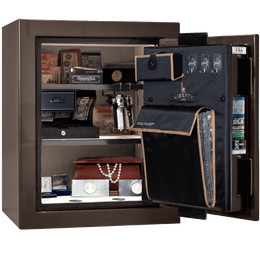
A walk-in closet is a prime location for a safe. For a truly seamless look, consider building the safe into a custom shelving unit or cabinetry. This method not only conceals the safe but also makes it a functional part of your closet's organization. A model specifically designed as a closet safe can fit perfectly into standard closet dimensions. Surround it with drawers for clothing and shelves for shoes to create a sophisticated and secure storage solution. The safe becomes just another cabinet door, hidden in plain sight.
The Bedroom's Hidden Guardian
Your bedroom offers multiple opportunities for discreet placement. A safe can be installed inside a deep armoire or a sturdy cabinet, hidden behind closed doors. Alternatively, don't be afraid to make the safe a statement piece. A beautifully finished safe, such as one from the Colonial Series, can be placed in a corner and serve a dual purpose. Use its flat top as a functional surface for a lamp or decorative items, transforming it from a simple security device into a piece of fine furniture that complements your decor.
The Built-In 'False Wall' Solution
For the ultimate in concealment, a "false wall" installation offers a custom, high-security solution. This approach involves building a small, recessed space in a wall to house the safe, which is then covered by something inconspicuous. Popular options include a sliding bookshelf, a hinged full-length mirror, or a large piece of framed artwork. While this requires more construction, it results in a completely hidden safe that is virtually undetectable to the casual observer.
Key Considerations Before Installation
Measure Twice, Install Once
Before purchasing, carefully measure the intended space. Account not only for the safe's height, width, and depth but also for the door swing. Ensure there's enough clearance to open the door completely to access all contents. Also, measure hallways, stairwells, and door frames to ensure you can get the safe to its final destination.
Assess Your Floor's Strength
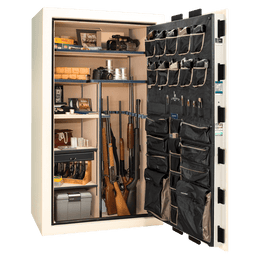
Quality safes are heavy. It's crucial to evaluate whether your floor can support the weight, especially for larger models like the Collector gun safe. For installations on upper floors, position the safe near a load-bearing wall and across floor joists to distribute the weight. If you're unsure, consulting a contractor is a wise investment.
The Critical Step: Anchoring Your Safe
An unanchored safe is just a heavy box that can be carted away. Bolting your safe to the floor (or wall) is non-negotiable for true security. All Liberty Safes come with pre-drilled holes for easy anchoring into wood or concrete. This single step dramatically increases its resistance to theft. For detailed instructions, refer to our Gun Safe Use and Care guides.
Don't Forget About Lighting
Closets and concealed spaces are often poorly lit. Seeing and organizing the contents of your safe can become a challenge. An interior lighting system is a must-have accessory. Consider an easy-to-install gun safe LED light kit with a motion sensor to automatically illuminate your safe's interior the moment you open the door.
Did You Know?
The primary bedroom is one of the first places burglars search, making clever concealment and robust anchoring more important than ever for a safe located in this area.
A properly anchored safe is exponentially more difficult for a would-be thief to attack, pry open, or remove from your home.
A Solution for Every American Home
Across the United States, homes come in all shapes and sizes, from sprawling suburban houses to compact urban apartments. The beauty of these creative installation ideas is their adaptability. Whether you are integrating a safe into a spacious walk-in closet in a Texas ranch house or finding a clever spot in a New York City bedroom, there is a solution that fits your life. At Liberty Safe, we are proud to offer America's #1 gun safes and home safes, all made in the USA. Our diverse range of sizes, styles, and security levels ensures that every American homeowner can find the perfect safe to protect what matters most.
Ready to Find the Perfect Safe for Your Space?
Your valuables deserve the best protection, integrated seamlessly into your home. Explore our wide range of home and gun safes to find the ideal fit for your bedroom or closet.
Contact Our Experts TodayFrequently Asked Questions
Can I install a safe on the second floor of my home?
Yes, you can. The key is proper placement. Position the safe above a load-bearing wall or in a corner where two exterior walls meet. It's also best to place it perpendicular to the floor joists to distribute the weight across several beams. For very large safes, consulting a structural engineer is recommended.
How do I hide a safe in a small closet?
In a small closet, concealment is key. Place the safe on the floor in a back corner and obscure it with a false floor panel, a laundry basket, or long-hanging clothes. You can also build a simple box or shelf around it to make it look like part of the closet's structure.
Is it better to have a mechanical or electronic lock for a bedroom safe?
This comes down to personal preference. Electronic locks offer faster access, which can be critical in an emergency, and allow for easily changeable codes. Mechanical dial locks are extremely reliable and don't require batteries but can be slower to open. Both offer excellent security.
What tools do I need to anchor my safe?
You will typically need a heavy-duty drill, a concrete or wood drill bit corresponding to the anchor bolt size, a socket wrench set, and a hammer. The specific tools may vary based on your flooring material and the anchoring hardware included with your safe.
Will installing a safe damage my floor?
When done correctly, anchoring a safe should not cause significant damage. Small holes will be drilled for the anchor bolts. It's recommended to place a rubber mat or piece of plywood underneath the safe to prevent scratching or indentation on hardwood, laminate, or tile floors.