


Cold weather is hard on gear—your storage routine matters as much as your hunt.
Winter hunting season has a way of putting your equipment through rapid temperature swings: a cold truck, a warm house, wet gloves, melting snow, condensation on metal, and damp fabric that “seems dry” until it’s packed away. A smart home-safe setup (combined with a few simple habits) helps protect firearms, optics, documents, and small valuables from moisture-related damage, while keeping everything organized and ready for the next trip.
Why cold months create storage problems (even indoors)
Winter isn’t only “dry air.” The real trouble is condensation: when cold metal and glass move into warmer air, moisture can form on surfaces quickly. That moisture can creep into tight spaces—around optics housings, action components, mounting screws, and even inside cases and soft goods.
Inside a closed safe, the risk can increase if you load in wet gear and then keep the door shut for days. The goal is to keep the safe interior in a stable, controlled range—especially for metal and wood.
Inside a closed safe, the risk can increase if you load in wet gear and then keep the door shut for days. The goal is to keep the safe interior in a stable, controlled range—especially for metal and wood.
The “safe microclimate” rule: humidity is the number to manage
For winter storage, focus on relative humidity (RH) inside your safe. Liberty Safe recommends an interior RH target of 30%–50% to help reduce rust and mildew risk. (libertysafe.com)
Two practical takeaways:
Two practical takeaways:
1) Measure first. Add a small hygrometer inside the safe so you know what’s happening (especially after you store wet items). (libertysafe.com)
2) Control moisture with the right tool. In most homes, a mix of air circulation + moisture absorption is the easiest path.
Quick “Did you know?” winter storage facts
Cold weather can shorten electronic lock battery life—swap batteries before peak winter travel so you’re not troubleshooting on a busy morning. (libertysafe.com)
Humidity above 50% inside a safe can encourage rust and mildew, especially if you store damp soft goods in a closed space. (libertysafe.com)
Plug-in dehumidifier rods work by gently warming air to create convection and reduce condensation risk inside enclosed storage. (libertysafe.com)
A winter-proof breakdown: what to store in your safe (and what not to)
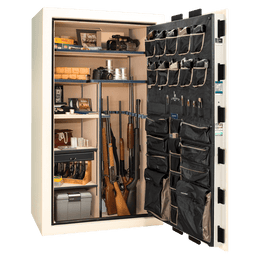
Your safe is ideal for items that benefit from security + a controlled environment. During cold months, prioritize:
For secure storage practices, many safety resources emphasize storing firearms locked and unloaded, with ammunition stored separately. (cdc.gov)
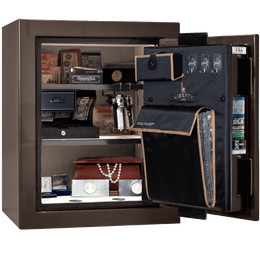
Great candidates: optics, suppressor covers (after fully drying), hunting licenses/permits, small valuables, backup keys, and gear you want to keep dry and organized.
Use caution: damp boots, wet clothing, and “just used” soft cases. Dry them first, then store.
For secure storage practices, many safety resources emphasize storing firearms locked and unloaded, with ammunition stored separately. (cdc.gov)
Step-by-step: cold-month hunting gear care (a simple routine that works)
1) Stop condensation before it starts (the “acclimate” habit)
Coming in from the cold? Give metal and optics a short acclimation period in a controlled room before sealing them into a case or safe. The goal is to avoid trapping moisture in a closed environment.
2) Dry soft goods fully (gloves, slings, soft cases)
If it touched snow, rain, or a wet truck bed, assume it’s damp. Air-dry gear until it’s truly dry to the touch—especially seams and padding—then store.
3) Control safe humidity with a proven method
Most homeowners do best with one of these approaches:
Electric dehumidifier rod: gently warms air to create circulation and reduce condensation risk. (libertysafe.com)
Desiccant (silica gel): passively absorbs moisture and is useful when power isn’t available. (libertysafe.com)
4) Add visibility so you don’t “set it and forget it”
Winter gear care works best when you actually check it. Good interior lighting makes it easier to spot moisture, wipe down surfaces, and keep shelves organized.
5) Replace batteries before deep winter (electronic lock owners)
Cold snaps and seasonal travel are the worst time to learn your batteries are weak. A proactive swap helps keep access simple and consistent. (libertysafe.com)
Quick comparison table: winter moisture-control options
| Option | How it helps | Best for | What to remember |
|---|---|---|---|
| Electric dehumidifier rod | Creates gentle warmth and convection to reduce condensation risk inside the safe. (libertysafe.com) | Most home safes with available power | Best paired with a hygrometer so you can confirm RH is staying in range. (libertysafe.com) |
| Silica gel desiccant | Absorbs moisture directly from the air (no electricity). (libertysafe.com) | Closets, remote cabins, power-limited areas | Must be recharged/replaced when saturated. |
| Interior lighting | Helps you see moisture, organize gear, and maintain a consistent routine. | Any safe used frequently during winter | Motion sensor kits help reduce hassle—open the door, see everything. |
Tip: Liberty Safe’s guidance emphasizes a balanced approach—keep your safe not too humid, but not too dry, aiming for that 30%–50% RH zone when possible. (libertysafe.com)
Local angle: what “winter” means across the United States
“Cold months” look different depending on where you live:
Snowy / freeze-thaw regions: condensation is your main enemy—focus on acclimation, drying, and stable interior safe humidity.
Coastal and high-humidity regions: you may need more consistent moisture control (rod + desiccant + hygrometer) to hold the 30%–50% target. (libertysafe.com)
High desert / very dry interiors: don’t overcorrect—extreme dryness isn’t ideal for everything stored together (paper, leather, wood). Aim for balanced RH. (libertysafe.com)
Want help dialing in a winter-safe setup?
If you’re trying to keep winter hunting gear organized, visible, and protected from moisture swings, Liberty Safe can help you choose the right accessories and setup for your space.
FAQ: Winter hunting gear care and safe storage
What humidity should I keep inside my safe during winter?
A good target is 30%–50% relative humidity. Liberty Safe recommends this range to help reduce rust and mildew risk. (libertysafe.com)
Should I store wet gear in my safe if I’m in a hurry?
Try not to. Dry items first so you don’t trap moisture in a closed environment. If something has to go in temporarily, keep humidity control running and open the safe later to check and air out as needed.
Do I need a hygrometer inside my safe?
Yes if you want consistent results. Without measuring, you’re guessing. Liberty Safe notes you “don’t [know] unless you use a hygrometer.” (libertysafe.com)
Is a dehumidifier rod or desiccant better for winter?
If you have power, a rod is a convenient “always on” option that helps reduce condensation through gentle warming and air circulation. Desiccant is great when power isn’t available, but it requires regular replacement or recharging. (libertysafe.com)
What are widely recommended secure storage habits?
Many safety resources recommend storing firearms locked and unloaded, with ammunition stored separately, and keeping access limited to authorized adults. (cdc.gov)
Glossary (quick, plain-English)
Relative Humidity (RH)
A percentage showing how much moisture the air is holding compared to the maximum it could hold at that temperature. RH changes as temperature changes—even if the actual moisture in the air stays the same.
Condensation
Water droplets forming when warm, moist air hits a colder surface (common when winter-cold gear comes indoors).
Hygrometer
A small device that measures humidity (often also temperature). Useful for confirming your safe is staying in the 30%–50% RH range. (libertysafe.com)
Desiccant
A moisture-absorbing material (often silica gel) used to pull water vapor out of the air in an enclosed space. (libertysafe.com)