


Keep Your Collection in Pristine Condition, Safe from the Silent Threat of Moisture
You've invested not only in your valuable firearms but also in a high-quality safe to protect them from theft and fire. However, a hidden danger lurks inside even the most secure safe: humidity. Excess moisture in the air can lead to rust, corrosion, warped wood stocks, and damaged optics, silently destroying the value and function of your collection. Understanding how to control the environment inside your safe is a crucial step in responsible firearm ownership. This guide will provide you with the knowledge and strategies for preventing rust and humidity damage, ensuring your firearms remain in perfect condition for generations to come.
Why Humidity is the Ultimate Enemy of Your Firearms
Rust is the result of a chemical reaction called oxidation, where iron or steel is exposed to oxygen and moisture. Even microscopic amounts of water vapor trapped inside your safe can initiate this destructive process. While a safe protects from external elements, it can also trap ambient moisture from the air when you open and close the door. Temperature fluctuations can exacerbate the problem, causing condensation to form on the cool metal surfaces of your guns.
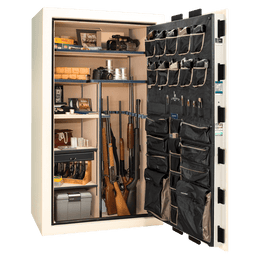
The damage isn't limited to metal components. Wooden stocks can absorb moisture, causing them to swell, warp, or crack over time. Delicate optics can fog internally, and even your ammunition can be compromised. Properly managing the internal climate of your safe is not just about preventing cosmetic blemishes; it's about preserving the integrity and functionality of your entire collection. For valuable collections, exploring options like one of our Collector Gun Safes provides ample space to ensure proper storage and airflow.
Monitoring and Maintaining the Ideal Safe Environment
The first step in controlling humidity is measuring it. Experts agree that the ideal Relative Humidity (RH) level inside a gun safe should be between 40% and 50%. This range is dry enough to prevent rust but contains enough moisture to keep wood stocks from drying out and cracking.
To monitor these levels, you'll need a hygrometer. A quality digital hygrometer is an affordable and indispensable tool that provides accurate, real-time readings of both the temperature and humidity inside your safe. Place it on a shelf where you can easily see it, and make a habit of checking it regularly. This allows you to proactively address any changes before they become a problem.
Choosing Your Weapon Against Moisture: Dehumidifier Options
Once you're monitoring the humidity, you need a way to control it. There are several effective methods for dehumidifying a safe, each with unique advantages.
| Method | How It Works | Pros | Cons |
|---|---|---|---|
| Electric Dehumidifier Rods | Gently raises the air temperature inside the safe, causing warm air to circulate and preventing condensation from forming. | Continuous, maintenance-free operation; covers entire safe interior. | Requires a power outlet inside or near the safe. |
| Rechargeable Desiccants | Canisters or boxes filled with silica gel beads that absorb moisture directly from the air. | Wireless, reusable, versatile placement; cost-effective over time. | Requires periodic 'recharging' by plugging into a wall or baking in an oven. |
| Disposable Desiccants | Packets or containers that absorb a set amount of moisture and are then discarded. | Inexpensive initial cost, simple to use, great for small spaces. | Needs regular replacement, can become costly long-term. |
Did You Know?
- Even in arid climates, drastic day-to-night temperature shifts can create condensation inside a safe, making humidity control essential everywhere in the United States.
- Proper ammunition storage is also critical. Excess moisture can corrode casings and degrade gunpowder. Consider a dedicated ammo cabinet for bulk storage.
- Fire-resistant safes often have seals that, while excellent for fire protection, also create an airtight environment that can trap moisture more effectively.
Best Practices for a Rust-Free Safe
1. Always Prepare Firearms for Storage
Before placing any firearm in your safe, ensure it is thoroughly cleaned and lightly coated with a quality rust-inhibiting oil or protectant. Pay special attention to the bore and action. Fingerprints can also trap moisture and oils that lead to rust, so wipe down all metal surfaces with a clean, soft cloth after handling.
2. Promote Air Circulation
An over-packed safe restricts airflow, creating pockets of stagnant, humid air. Organize your safe to allow air to circulate freely around every firearm. Using accessories like an AR-15 mag holder can help free up shelf space and improve organization. This not only aids humidity control but also prevents dings and scratches from guns bumping into each other.
3. Conduct Regular Inspections
Make it a routine to inspect your firearms every few months, even if they haven't been used. This allows you to catch any potential issues early. During these checks, confirm your hygrometer reading is in the optimal range and that your dehumidifier is functioning correctly. Better yet, illuminate your collection fully with a gun safe LED light kit to make inspections thorough and easy.
Secure Your Peace of Mind
Protecting your firearms goes beyond a locked door. With the right tools and knowledge, you can create a perfectly controlled environment within your safe, safeguarding your collection from the damaging effects of humidity.
Contact Our ExpertsFrequently Asked Questions
What is the ideal humidity level for a gun safe?
The recommended relative humidity for a gun safe is between 40% and 50%. This level is low enough to prevent rust and corrosion on metal parts while retaining enough moisture to protect wooden stocks from becoming too dry and cracking.
How often should I recharge my desiccant pack?
This depends on the size of the desiccant, the size of your safe, and the ambient humidity in your location. Most modern rechargeable desiccants have an indicator that changes color when it's saturated and ready to be recharged. Check it weekly at first, and then adjust as you learn its cycle.
Can I use more than one type of dehumidifier at once?
Yes, many safe owners use a combination approach. For example, an electric dehumidifier rod can provide constant air circulation, while a rechargeable desiccant box can be placed in a specific area to absorb any residual moisture. This creates a robust, multi-layered defense against humidity.
Will a dehumidifier also protect my important documents and ammo?
Absolutely. Controlling humidity is beneficial for anything you store in your safe. It prevents paper documents from becoming mildewed or brittle and protects ammunition from moisture that can corrode brass casings and render primers inert.
Glossary of Terms
Relative Humidity (RH)
The amount of water vapor present in the air, expressed as a percentage of the maximum amount needed for saturation at the same temperature. It's a key metric for determining rust risk.
Desiccant
A substance, typically silica gel, that absorbs moisture from the air. It is used in dehumidifiers to create and sustain a state of dryness.
Hygrometer
An instrument used to measure the level of humidity (Relative Humidity) in the atmosphere. A crucial tool for monitoring the climate inside your safe.
Oxidation
The chemical reaction between a substance (like the steel in your firearm) and oxygen, often accelerated by moisture. This process is what causes rust to form.