


Make “secure, organized, and predictable” your travel standard
Transporting firearms safely is less about “special tricks” and more about consistent habits: unloaded condition, controlled access, and smart organization—whether you’re driving across the state, flying to a hunting trip, or moving to a new home. This guide focuses on clear, practical steps that reduce risk, protect your equipment, and help you avoid common travel-day mistakes—without getting into politics or debates.
Start with the “Safe Passage” baseline for vehicle transport
For interstate travel by car, a widely cited federal baseline is the “safe passage” provision in 18 U.S.C. § 926A. It describes a framework where, during transportation, the firearm is unloaded and not readily accessible from the passenger compartment; and if the vehicle does not have a separate trunk, the firearm or ammunition should be in a locked container (not the glove box or console). (law.cornell.edu)
Practical takeaway: Even when you’re staying within one state, using the same “unloaded + locked + separated” approach is a strong safety habit—and it keeps your routine consistent from trip to trip.
A simple, repeatable packing system (that works for most travelers)
If you want a system you can teach to a spouse, a hunting buddy, or your future self at 4:30 a.m., use three separate “zones”:
Zone 1: The firearm case
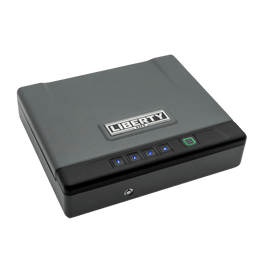
Use a rigid case (or a purpose-built soft case with a lockable zipper path). Confirm unloaded condition, then case it. If traveling with others, keep the case under your direct control during loading/unloading and transitions.
Zone 2: Ammunition & magazines
Store ammunition in a dedicated container designed for organization and protection. For air travel, ammunition must be packaged in boxes designed to carry it (and declared to the airline), and it’s prohibited in carry-on baggage. (tsa.gov)
Zone 3: Documentation & small essentials
Keep a small pouch for essentials: keys/locks, batteries for optics, a basic cleaning cloth, and contact numbers for your airline/hotel/range. The goal is to avoid “digging” around equipment in a public setting.
Quick comparison table: Car travel vs. flying
| Scenario | What “safe” looks like | Common mistake to avoid |
|---|---|---|
| Driving (interstate) | Unloaded, not readily accessible; locked container if no separate trunk; avoid glove box/console. (law.cornell.edu) | Leaving the case where passengers can reach it, or mixing ammo & firearm access in the cabin. |
| Flying (checked baggage) | Unloaded, locked hard-sided case, declared at check-in; ammo in proper packaging; no firearms/ammo in carry-on. (tsa.gov) | Arriving at security with anything firearm-related in carry-on or loosely packaged ammunition. |
| Hotel / temporary stop | Plan your transitions: move gear discreetly, minimize public handling, secure items when unattended. | “Just for a minute” leaving equipment in an easily accessible location. |
Step-by-step: A safe, calm loading routine for road trips
1) Choose a low-distraction staging area
Do your checks where you won’t be interrupted. The fewer “eyes on you” and the fewer distractions, the better your consistency.
2) Confirm unloaded condition—every time
Make it a ritual: open, visually inspect, and physically verify as appropriate. Keep the muzzle in a safe direction and keep your finger off the trigger. The NRA’s core safety rules are a solid reminder for handling steps around travel days. (gunsafetyrules.nra.org)
3) Case it, then lock it
Lock the case before you go to the vehicle so there’s no “last second” scramble.
4) Separate “people space” from “storage space”
Put cased firearms in the trunk or a locked storage area, and keep ammo separate. This mirrors the safe-passage idea of reducing access from the passenger compartment. (law.cornell.edu)
5) Plan your stops
Think ahead about fuel, meals, and overnight stops so you’re not making decisions under time pressure. Good travel choices reduce “handling moments,” which is where most mistakes happen.
Did you know? Quick facts that help you travel smoother
Air travel rule of thumb: Firearms must be unloaded and in a locked hard-sided case as checked baggage, and you must declare them at the airline counter. (tsa.gov)
“Not readily accessible” matters: Federal safe-passage language emphasizes keeping firearms and ammunition out of direct reach from the passenger compartment. (law.cornell.edu)
State rules vary: Some states publish specific transport requirements (for example, California DOJ describes locked-container expectations for handguns). Always confirm requirements for your route and destination. (oag.ca.gov)
When you get home: transition from “transport” to “secure storage”
Travel is only half the equation. The other half is what happens right after you arrive—when routines break down and gear gets left out “temporarily.”
Choose a smart safe location
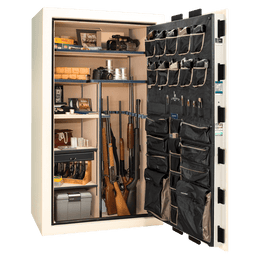
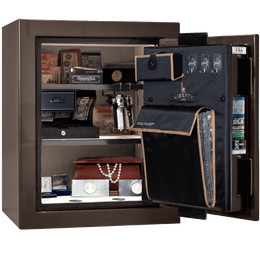
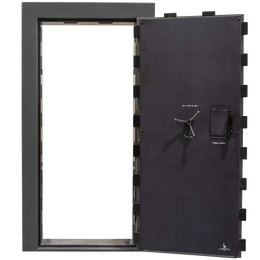
Liberty Safe recommends placing a safe where it’s not visible from windows or normal traffic areas, away from exterior doors and windows; and for fire protection, placing it in the basement/lowest level against an outside wall. (libertysafe.com)
Anchor for stability and security
Anchoring is one of the most practical upgrades you can make, and Liberty provides guidance for anchoring through pre-drilled holes (with different approaches for wood vs. concrete). (libertysafe.com)
Need help planning secure storage or choosing the right setup?
If you’re upgrading your safe, adding accessories, or want guidance on placement and anchoring best practices, Liberty Safe’s team can point you in the right direction.
Contact Liberty Safe
Prefer self-serve support? If you ever need a replacement combination/key, Liberty provides a notarized request process designed to protect ownership. (libertysafe.com)
FAQ: Transporting firearms safely
Do I have to lock my firearm in the trunk when driving?
Transport rules can vary by state, but the federal safe-passage framework for interstate travel focuses on an unloaded firearm that is not readily accessible from the passenger compartment; if there’s no separate trunk, it should be in a locked container (not the glove box or console). (law.cornell.edu)
Can I fly with a firearm in my carry-on?
No. TSA guidance requires firearms to be unloaded, locked in a hard-sided container, and transported as checked baggage only. (tsa.gov)
How should ammunition be packed for a flight?
TSA states ammunition is prohibited in carry-on bags and may be transported in checked baggage when packaged in a fiber/wood/plastic/metal box designed to carry ammunition and declared to the airline. (tsa.gov)
What’s a smart first step after arriving home from a trip?
Move from “travel mode” to “storage mode” right away: put secured items where they belong, avoid leaving cases out, and keep your safe positioned and anchored according to the manufacturer’s guidance. (libertysafe.com)
If I forget my safe combination, what should I do?
Liberty Safe provides a combination/key request process that requires verification (including notarization) to protect ownership, and notes processing time expectations. (libertysafe.com)
Glossary (quick definitions)
Locked hard-sided container
A rigid case that can be locked so the firearm cannot be accessed; commonly required for airline checked baggage transport. (tsa.gov)
Not readily accessible
A concept used in federal “safe passage” language indicating the firearm (and often ammunition) should not be reachable from the passenger compartment during vehicle transport. (law.cornell.edu)
Declared (air travel)
The act of notifying the airline at the ticket counter that you are checking a firearm and/or ammunition, as required by TSA guidance. (tsa.gov)