

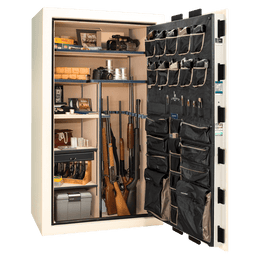
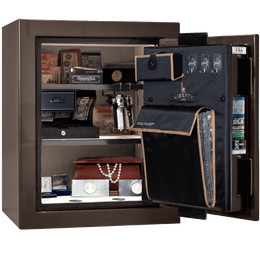
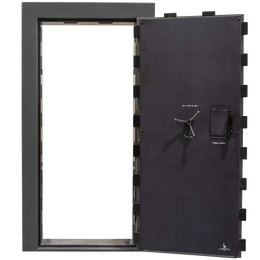
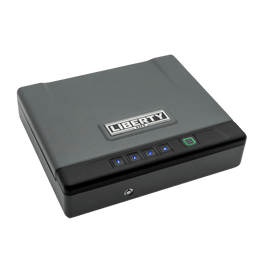

Choose a location that supports security, access, and long-term condition of your safe
Where you place a safe matters almost as much as which safe you buy. The right spot helps deter tampering, improves day-to-day usability, and reduces environmental stress that can affect contents over time. This guide walks through three common locations—garage, basement, and bonus room—with a simple checklist you can use to make a confident decision.
Start With the 5 Placement Priorities
1) Structure & floor strength
Safes are heavy—especially once loaded. Confirm your floor can support the weight (and that you can physically move the safe through doorways, turns, and stairs).
2) Anchoring potential
When appropriate for your model and situation, anchoring to concrete can improve stability and help prevent unwanted movement. Plan the exact anchor points before the safe is placed.
3) Environmental control
Humidity swings (garage and basement) can be hard on metal items, paper, and electronics over time. Choose a location where you can manage moisture and temperature changes.
4) Discretion & visibility
A safe that’s easy to spot is easier to target. Aim for a location that isn’t visible from common traffic areas, windows, or open garage doors.
5) Everyday access
The best spot is one you’ll actually use consistently—comfortable height, good lighting, and enough clearance to open the door fully.
Garage Placement: Convenient, But Plan for Moisture & Temperature Swings
Why homeowners like it
Easy delivery path, often a concrete slab, and minimal disruption to interior living space.
What to watch for
Garages can experience rapid temperature shifts that cause condensation, plus higher humidity in many regions. That’s tough on metal items and can affect paper and electronics over time—so plan for moisture control.
Practical garage tips
• Place the safe away from garage doors and exterior walls where temperature swings are strongest.
• Keep it off areas prone to puddling; consider a moisture barrier strategy if your slab sweats seasonally.
• Use interior lighting so you’re not searching in low light (a common “hidden friction” that reduces consistent use).
• Keep clearance for the door swing and for shelving/organizational accessories you may add later.
Optional upgrade: interior lighting for garage installs
If your safe will live in a garage or darker utility space, lighting makes organization easier and reduces the time the door stays open. Liberty Safe offers easy-to-install options like the Brightview Safe Light Kit and the Clearview Electrical LED Wand Light Kit.
If you prefer a portable backup light for quick visibility during organization, a compact tool like Liberty’s 500 Lumen Tactical Flashlight can be handy.
Basement Placement: Discreet and Stable—If You Manage Humidity
Why homeowners like it
Basements tend to be out of sight and often have strong floors. Temperatures can be more stable than garages in many climates.
What to watch for
Basements are commonly humid. For long-term storage, you’ll want a plan to keep the interior environment stable—especially if you store paper documents, photos, or electronics. (Media can be damaged at much lower temperatures than paper, which is why fire-rating classes vary by what you’re protecting.) (schwabcorp.com)
Practical basement tips
• Choose a spot away from sump pits, floor drains, and utility rooms with higher moisture.
• Plan your delivery route carefully—tight turns and stairs can be the real challenge, not the final footprint.
• Leave space for airflow around the safe (especially if the area is finished and insulated).
• If you’re storing sensitive media, consider a storage method that matches the protection needs of that media type. (schwabcorp.com)
Bonus Room Placement: Comfortable Access and Climate Control
Why homeowners like it
Bonus rooms often have HVAC, better lighting, and easy day-to-day access—great for staying organized and using your safe consistently.
What to watch for
Weight and structure. Upstairs or over-garage bonus rooms may have floor load limitations. Delivery logistics can also be more complex than a garage slab or basement corner.
Practical bonus room tips
• Place the safe against an interior wall when possible for better temperature stability.
• Avoid spots visible from windows; consider closets or dedicated storage nooks.
• Ensure full door swing without hitting trim, furniture, or shelving.
• Add a simple lighting solution inside the safe so organization stays effortless.
Explore closet-friendly safe options
Closet placements can be an excellent compromise: discreet, conditioned air, and easy daily access—especially when space is limited.
Quick Comparison Table: Garage vs. Basement vs. Bonus Room
| Location | Best For | Main Trade-Off | Setup Focus |
|---|---|---|---|
| Garage | Easy delivery, slab floors, convenience | Humidity/condensation risk, visibility when door is open | Moisture control, discretion, lighting |
| Basement | Low visibility, stable temps in many homes | Humidity management, stairs/delivery complexity | Dehumidification plan, clear access route |
| Bonus Room | Comfortable access, HVAC, organization | Floor load and moving logistics | Structural check, hidden placement, door clearance |
Step-by-Step: A Placement Walkthrough You Can Do in 20 Minutes
Step 1: Measure the safe and the path
Measure doorways, hall turns, stair widths, and ceiling height. Don’t forget handrails, light fixtures, and tight corners.
Step 2: Mark your “door swing zone”
Tape a rectangle on the floor where the safe will sit, then tape the door-swing arc. This helps you catch issues before delivery day.
Step 3: Identify moisture risks
Look for seasonal dampness, condensation zones, and any area where humidity spikes. If you’re choosing between two spots, pick the one where you can maintain a stable environment more easily.
Step 4: Plan anchoring (if appropriate)
If you’re anchoring into concrete, plan the hole locations and confirm you have the right tools and hardware for the job. Installers typically use a hammer drill and concrete anchors sized to the safe’s anchor holes, drilling to a depth that matches the anchor requirements. (shuntool.com)
Step 5: Set up “useability” details
Add lighting, basic organization, and a consistent routine (where keys go, where documents go, where accessories sit). Small details are what make a safe feel easy to use.
Did You Know? Quick Facts That Help You Choose Smarter
Fire ratings aren’t one-size-fits-all
UL fire classifications like Class 350, 150, and 125 refer to the maximum internal temperature allowed during testing—because paper and digital media have different heat tolerances. (schwabcorp.com)
Humidity matters for data/media protection
Certain record-protection tests include humidity limits (for example, media-focused categories include humidity constraints) because moisture and heat together can harm sensitive items. (schwabcorp.com)
Your best “security upgrade” can be placement
A discreet location with good door clearance and a realistic daily routine often beats a highly visible placement that becomes inconvenient.
Local Angle: What “United States” Homeowners Should Consider
Climate varies dramatically across the United States—from humid coastal air to dry mountain regions to four-season temperature swings. That means there isn’t one “best room” for every home. Instead, use a simple rule:
Pick the location you can keep most stable
If your garage or basement regularly gets damp, a conditioned interior room (or a closet/bonus room) may be the easier long-term win—especially for documents, photos, and electronics.
If you’re still deciding, write down your top two rooms and score them on: (1) humidity control, (2) discretion, (3) delivery path, (4) anchor potential, and (5) everyday access. The highest score is usually the right choice.
Want help choosing the best placement for your home setup?
If you have questions about installation planning, interior organization, or choosing the right safe for your space, Liberty Safe’s team can point you in the right direction.
Prefer self-serve guidance? Liberty also provides practical resources for owners on setup and care. Gun Safe Use and Care
FAQ: Safe Placement for Garages, Basements & Bonus Rooms
Is a garage a bad place for a safe?
Not automatically. A garage can be a practical location—especially with a concrete slab and a straightforward delivery path. The key is planning for humidity/condensation and choosing a discreet spot away from exterior doors and windows.
Should I bolt my safe to concrete?
Many homeowners choose to, when their safe model supports it and the installation surface is appropriate. Use the right tools (commonly a hammer drill) and anchor hardware sized to the safe and the concrete. (shuntool.com)
What’s the best room for storing documents and electronics?
A location you can keep stable (temperature and humidity) is usually best. Also, fire protection needs differ by what you store: UL classifications such as Class 350 (paper) and Class 125 (data/media) reflect different internal temperature limits during testing. (schwabcorp.com)
How much clearance do I need around the safe?
Enough to open the door fully and comfortably access shelves and organizers. If you plan to add interior lighting kits or door-mounted accessories later, leave extra room so the safe stays easy to use.
Where should I NOT put a safe?
Avoid locations with obvious visibility from windows or frequent visitor traffic, and avoid areas with known moisture problems you can’t control. If you’re torn between two spots, choose the one where you can maintain the most consistent environment.
Glossary
UL 72
A widely referenced fire-resistance testing standard for record protection equipment. Fire labels may specify a “Class” (internal temperature limit) and a time duration. (schwabcorp.com)
Class 350 / Class 150 / Class 125
Fire classification categories that indicate the maximum internal temperature allowed during testing—commonly associated with paper (350), magnetic media (150), and sensitive data media (125), with some categories also including humidity limits. (schwabcorp.com)
Concrete anchors (wedge/sleeve anchors)
Fasteners designed to secure heavy objects into concrete. Installation typically involves drilling a properly sized hole to the proper depth before setting the anchor. (shuntool.com)
Looking for more options? Browse Liberty Safe’s lineup of gun safes, home safes, and fire safes.